

The Association of Certified Fraud Examiners put the median loss from a single occupational fraud case at $104,000 in its 2026 Report to the Nations, and it found that 43 percent of those cases came to light through a tip rather than an audit or an internal control. That pairing is where ethics hotline ROI begins, because the most productive detection method in the entire study depends on whether an employee has somewhere to take what they already know. One year of an entry-level reporting channel costs about one percent of that median case.
Ethics Hotline ROI Starts with Detection Speed
Detection speed is where the money moves, because losses compound the longer a scheme runs uninterrupted. A typical case in the 2026 study lasted 12 months before anyone caught it, and cases found inside the first six months carried a median loss of $40,000, while schemes that ran past five years produced median losses above $1.1 million. Pulling detection from the twelfth month into the sixth is worth roughly $64,000 against the median.
Tips are what make that shift possible. More than half of the tips in the study came from employees, and 84 percent of perpetrators displayed at least one behavioral red flag before anyone caught them, which means the warning signs were visible to colleagues for most of those 12 months. An anonymous ethics and compliance hotline is the infrastructure that turns those observations into a case file.
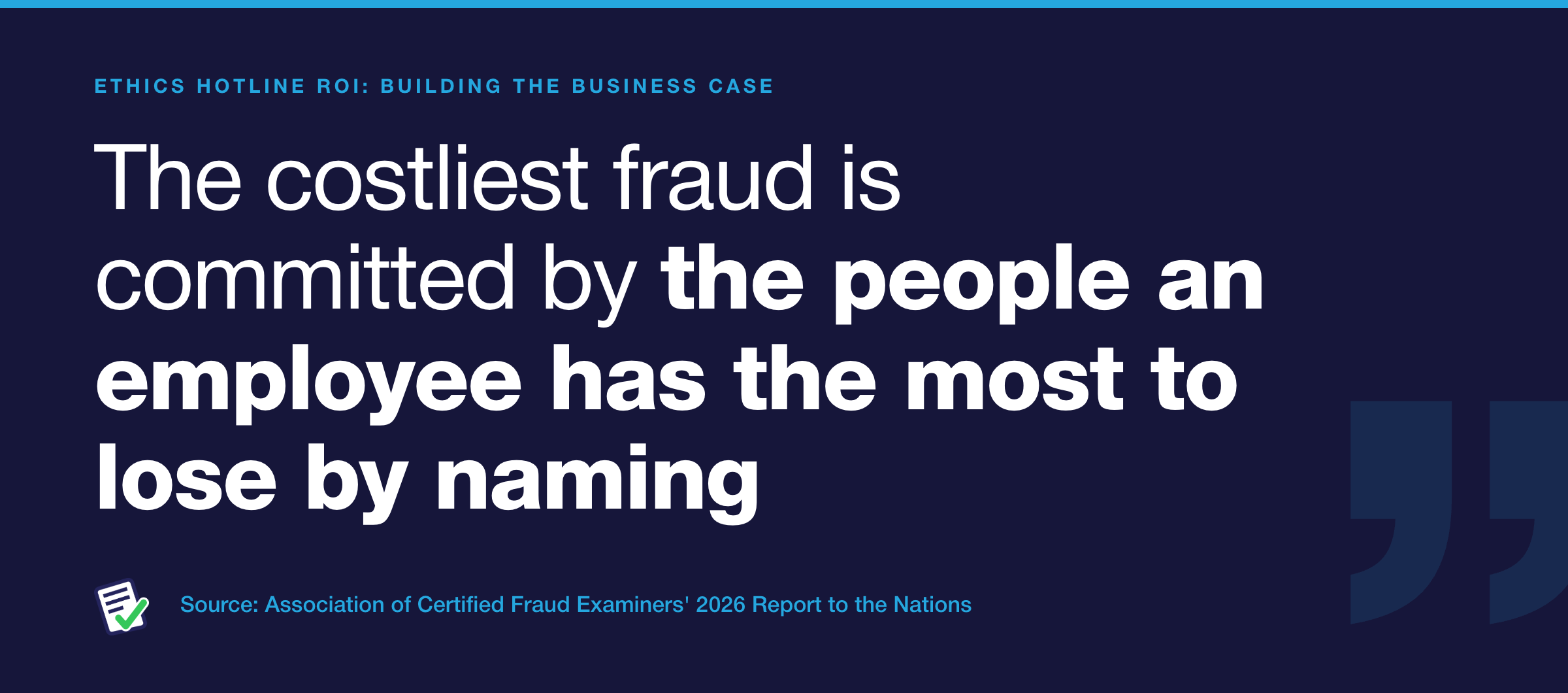
Anonymity carries more weight than it first appears, because the ACFE found that median losses caused by owners and executives ran more than nine times higher than those caused by staff-level employees. The costliest fraud is committed by the people an employee has the most to lose by naming, which is the precise situation a named reporting process handles worst.
Email and web-based reporting channels have both surpassed telephone hotlines as the most common way reports arrive, so a program built around a single toll-free number now captures the smaller share of what employees are willing to send.
The Costs an Ethics Hotline Is Working Against
The Equal Employment Opportunity Commission secured close to $660 million in monetary relief during fiscal year 2025, including $528 million recovered for 13,351 people through mediation and settlement before any lawsuit was filed, which the agency called the highest pre-litigation total in its 60-year history. Dividing one figure by the other puts the average pre-litigation recovery near $39,500 per person, and that average sits well below the cost of the cases that go to trial. Harassment and discrimination claims that surface internally and early tend to resolve at a fraction of what the same facts cost once an agency is involved.
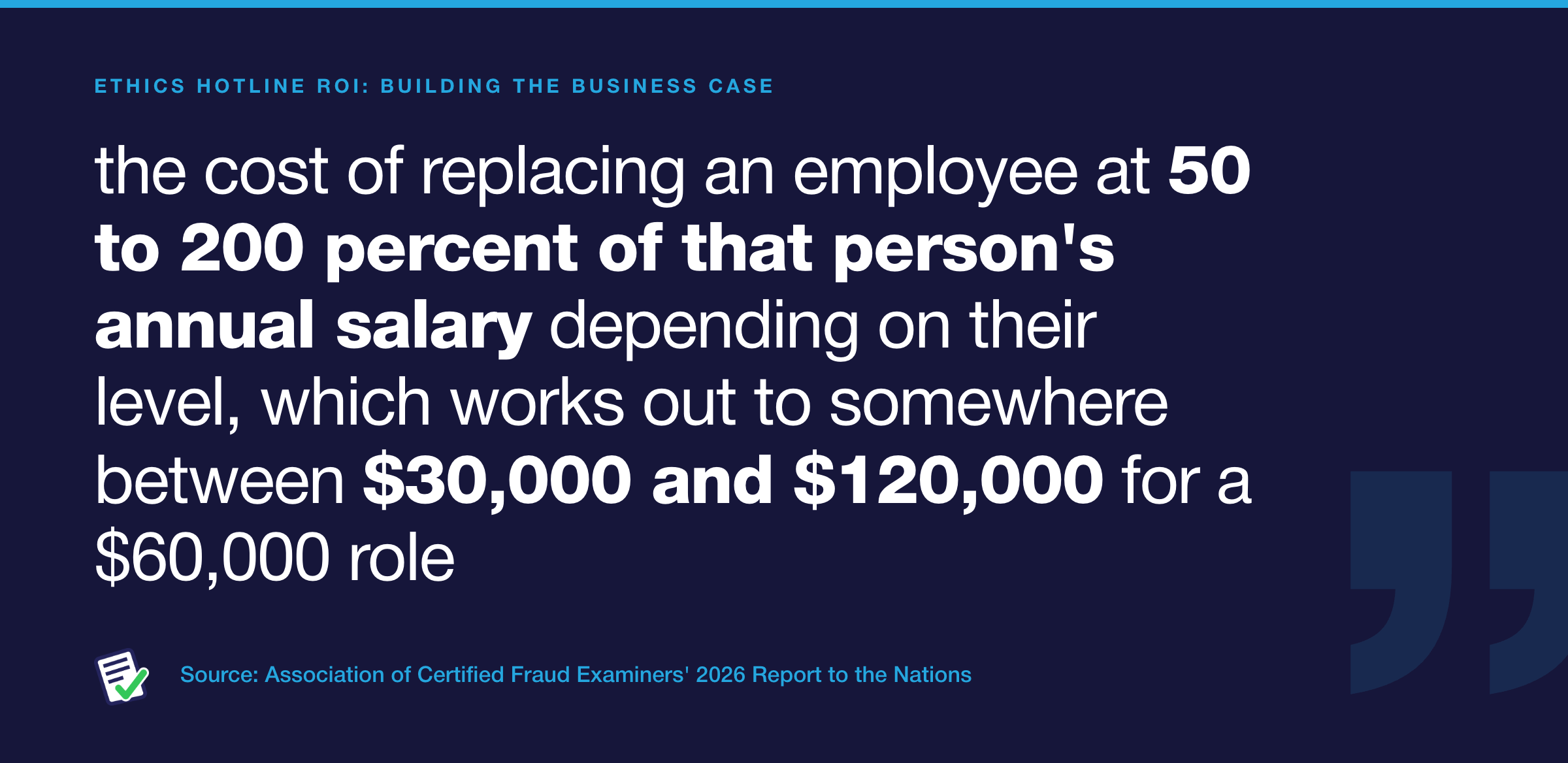
Turnover belongs in the same calculation. SHRM puts the cost of replacing an employee at 50 to 200 percent of that person’s annual salary depending on their level, which works out to somewhere between $30,000 and $120,000 for a $60,000 role. The National Safety Council puts the average medically consulted work injury at $48,000, which is the figure we worked through in more depth in our post on manufacturing safety reporting.
Ethics Hotline ROI Math on a $999 Investment
Ethics Hotline ROI: What One Avoided Case Is Worth
| Ethics hotline ROI input | Amount | Source |
| Median occupational fraud loss per case | $104,000 | ACFE Report to the Nations, 2026 |
| Median loss when detected within six months | $40,000 | ACFE Report to the Nations, 2026 |
| Median loss when a scheme runs past five years | $1,100,000 | ACFE Report to the Nations, 2026 |
| Average EEOC pre-litigation recovery per person | $39,500 | Derived from EEOC FY2025 figures |
| Cost to replace one employee at a $60,000 salary | $30,000 to $120,000 | SHRM range of 50% to 200% of salary |
| Average medically consulted work injury | $48,000 | NSC Injury Facts, 2024 |
| Anonymous reporting channel, entry pricing | $999 per year | report it® Small Business Edition |
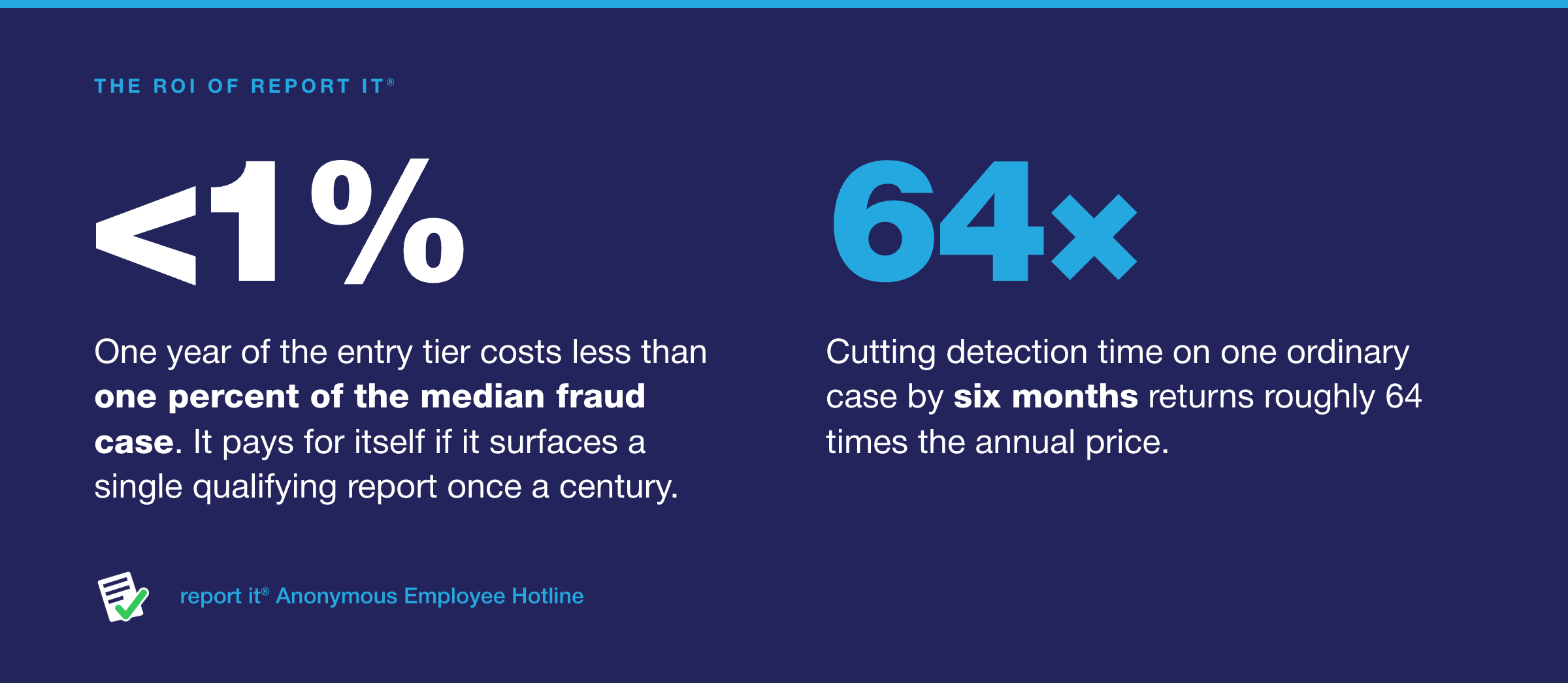
One year of the entry tier costs slightly less than one percent of the median fraud case, so the channel pays for itself if it surfaces a single qualifying report once a century. Shortening detection on one ordinary case by six months returns roughly 64 times the annual price. CFEs surveyed for the report estimate that organizations lose 5 percent of revenue to fraud each year, which gives a company doing $10 million in revenue a $500,000 annual exposure to weigh against a four-figure line item.
The median understates what a finance team is insuring against. The average loss across the 2,402 cases was $1,457,000, and 20 percent of them exceeded $1 million, so the distribution has a long tail that a single detected case can land anywhere along.
Scope matters when the number goes in front of a budget committee. The $999 per year Small Business Edition covers up to 50 employees and up to three designated report recipients, and it delivers anonymous reporting across phone, text, web, app, and QR code. Organizations that need anonymous two-way messaging with a reporter belong in the Pro Edition and above, where case management and intelligent routing by incident type also sit. Match the headcount and the follow-up requirements to the tier before the number goes on a slide, since a finance team will find that discrepancy quickly.
Why Smaller Organizations See the Strongest Ethics Hotline ROI
The 2026 report found that small businesses experience the highest median losses of any organization size, and it identified the mechanism behind that finding. More than half of all cases in the study involved either a lack of internal controls or an override of the controls that existed, and smaller companies run fewer separated duties and fewer layers of review, so a single person often controls a process end to end. The informal culture that makes a small company pleasant to work in is the same culture that makes an employee reluctant to accuse a colleague they eat lunch with.
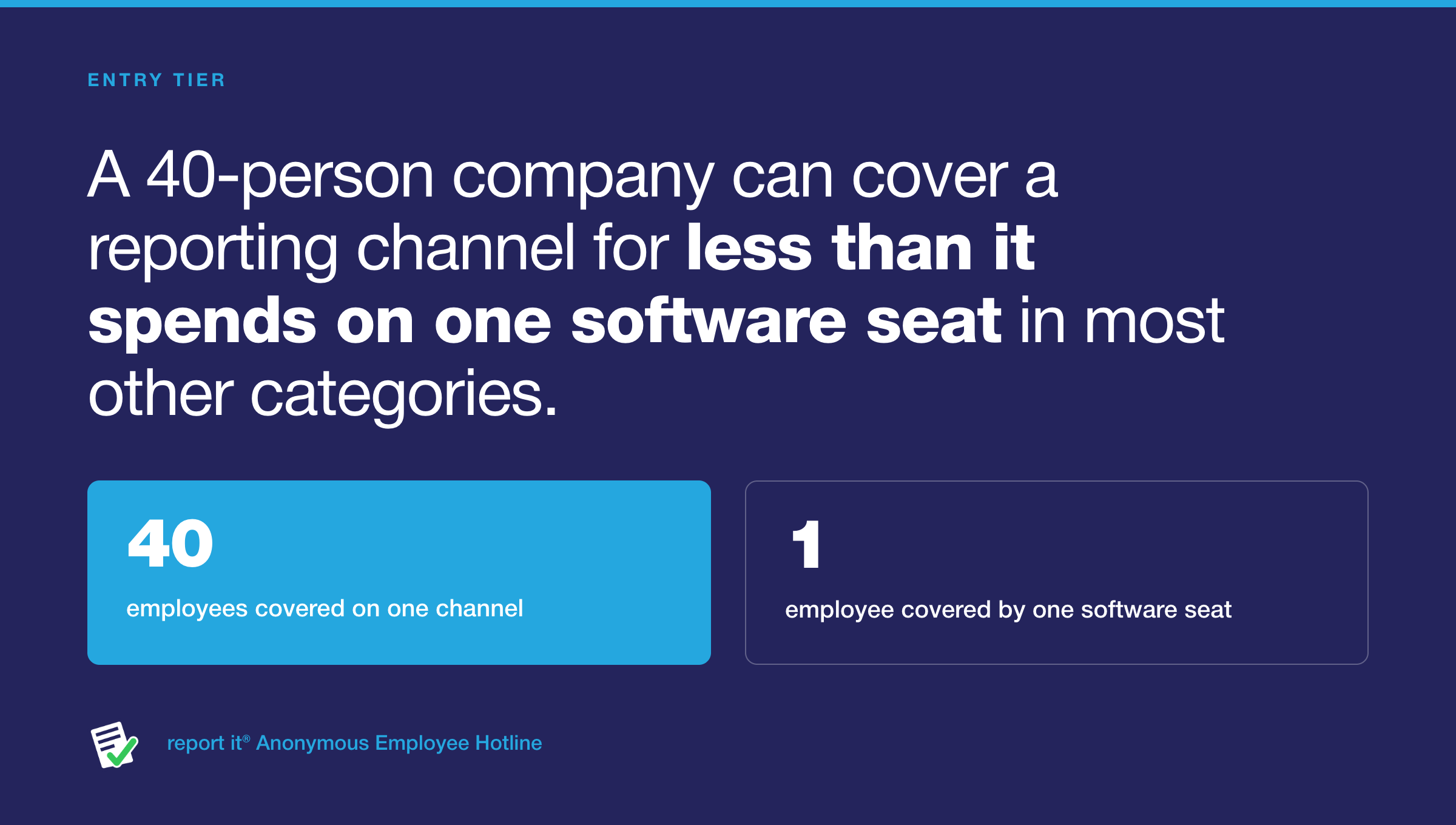
That combination puts the highest exposure in the hands of the organizations with the least compliance budget to address it, and at the entry tier a company of 40 people can cover a reporting channel for less than it spends on a single software seat in most other categories.
What Drives Ethics Hotline ROI After the Purchase
The awareness half of the program shows up directly in the ACFE data. Employees who received fraud awareness training produced more than twice as many tips as employees who did not, and organizations that trained both staff and management reported a median loss of $84,000 per case against $150,000 for organizations that trained neither group. That $66,000 gap comes from communication, which is why report it® includes program awareness materials with the platform instead of leaving a compliance lead to build posters from scratch.
Follow-through decides whether the second report ever arrives. Employees calibrate their willingness to report against what they saw happen the last time somebody did, so a first report that visibly produced nothing will cost more reports than any single feature can recover, and our post on why anonymous reporting and open door policies work together covers how the two channels reinforce each other. The documentation side compounds the value, since a record of what came in and how it was resolved is what a regulator asks for later, a point we worked through in the context of SOX whistleblower requirements.
Frequently Asked Questions About Ethics Hotline ROI
What is the ROI of an ethics hotline?
The ROI of an ethics hotline comes from detecting misconduct sooner, since losses grow the longer a scheme runs. The ACFE puts the median occupational fraud loss at $104,000 per case and reports that cases caught within six months carry a median loss of $40,000, so cutting detection time on one case can return many times the annual cost of the channel. Entry pricing starting near $999 per year makes the payback threshold a single qualifying report.
How do you calculate ethics hotline ROI?
Multiply your estimated annual incidents by the average cost of an incident, estimate the share of those the channel would surface earlier, and compare the result against the annual platform cost. Most organizations use the ACFE median of $104,000 per fraud case as the base figure, and the calculation usually favors the hotline by a wide margin because the annual cost is a fraction of one incident.
How much does an ethics hotline cost?
Pricing for report it® starts at $999 per year for the Small Business Edition, which covers up to 50 employees and up to three designated recipients. Organizations that need anonymous two-way messaging with a reporter move up to the Pro Edition and above, where case management and routing by incident type also sit. Cost scales with headcount and with how much case follow-up the program requires.
Do ethics hotlines reduce fraud losses?
Organizations that surface fraud through tips detect it earlier, and earlier detection is the single strongest driver of lower losses in the ACFE data. Tips accounted for 43 percent of the fraud cases in the 2026 Report to the Nations, and more than half of those tips came from employees, which makes an accessible internal reporting channel the mechanism behind the most productive detection method available.
Is an ethics hotline worth it for a small business?
Small businesses carry the highest median fraud losses of any organization size according to the ACFE, largely because they run fewer separated duties and fewer layers of review. That exposure combined with entry pricing near $999 per year gives smaller organizations a stronger return on a reporting channel than larger ones, even though larger companies are more likely to have bought one.
Put a Number on Your Ethics Hotline ROI Before the Next Budget Cycle
The business case for an ethics hotline rarely fails on the math, since a channel costing a fraction of one median incident wins that comparison under almost any assumption. It fails when the program gets bought without the awareness work that generates reports or the follow-through that keeps them coming, and the ACFE numbers put a price on both of those omissions.
Report it® has spent more than 20 years building anonymous reporting programs that organizations keep using after the first quarter. Schedule a demo to work through the numbers for your headcount and see what the channel would surface.